2026 Exposition:

Ce projet a été rendu possible grâce au soutien du Conseil des arts du Canada, du Conseil des Arts du Manitoba, du Conseil des arts de Winnipeg, de Francofonds et de La Maison des artistes visuels francophones.

I gratefully acknowledge the support of the Canada Council for the Arts, the Manitoba Arts Council, the Winnipeg Arts Council, Francofonds and La Maison des artistes visuels francophones, whose funding and partnership have made this project possible.

Images by / par Marcel Druwé :


“We invest in objects all that we find impossible to invest in other people.” — Jean Baudrillard
What kinds of objects deserve our care?
Dolls, robots, mannequins, and prosthetic bodies occupy an uncertain space between object and companion. Throughout history these artificial human figures have served as toys, research tools, devotional objects, stand-ins, and technological experiments. Their design shapes not only how we perceive them, but also how we relate to them.
Bringing these figures together in unexpected contexts, this exhibition explores the emotional, ethical, and cultural relationships we form with artificial bodies. Why does a doll that moves feel unsettling, while a motionless robot feels incomplete? Why should neither become too human? These contradictions expose the shifting boundaries between person and object, empathy and discomfort, imagination and reality.
As artificial companions become increasingly present in everyday life, the exhibition invites viewers to consider not only how we have learned to care for these figures, but also what forms that care, and those relationships, might take in the future.
« Nous investissons dans des objets tout ce que nous trouvons impossible d'investir dans d'autres personnes.»
- Jean Baudrillard
Quels types d'objets méritent nos soins ?
Les poupées, les robots, les mannequins et les corps prothétiques occupent un espace incertain entre l'objet et le compagnon. Tout au long de l'histoire, ces figures humaines artificielles ont servi de jouets, d'outils de recherche, d'objets de dévotion, de remplacements et d'expériences technologiques. Leur conception façonne non seulement la comment nous les percevons, mais aussi la façon dont nous nous rapportons à eux.
Réunissant ces figures dans des contextes inattendus, cette exposition explore les relations émotionnelles, éthiques et culturelles que nous formons avec les corps artificiels. Pourquoi une poupée qui bouge se sent-elle troublante, alors qu'un robot immobile se sent incomplet ? Pourquoi ni l'un ni l'autre ne devrait-il devenir trop vraisemblable à un humain ? Ces contradictions exposent les frontières changeantes entre la personne et l'objet, l'empathie et l'inconfort, l'imagination et la réalité.
Alors que les compagnons artificiels deviennent de plus en plus présents dans la vie quotidienne, l'exposition invite les téléspectateurs à réfléchir non seulement à la façon dont nous avons appris à prendre soin de ces figures, mais aussi aux formes que ces soins, et ces relations, pourraient prendre à l'avenir.


Images by / par Marcel Druwé


Images by / par Vince Blais :


Images by / par Vince Blais
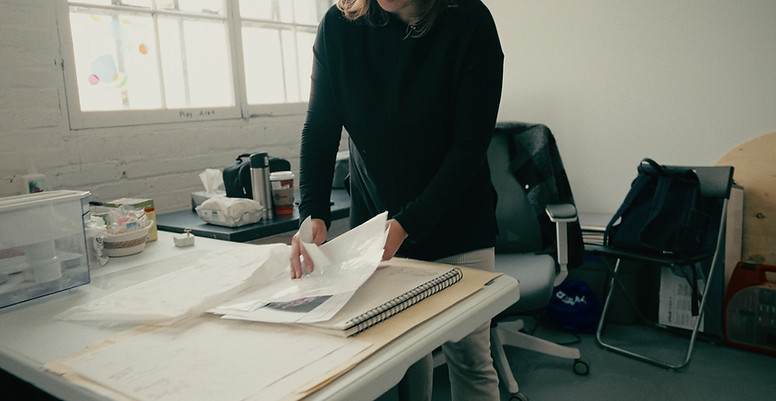
Early in progress images by Emilie St-Hilaire


